Mamma Mia 2 – Cast, Plot, Songs and Facts
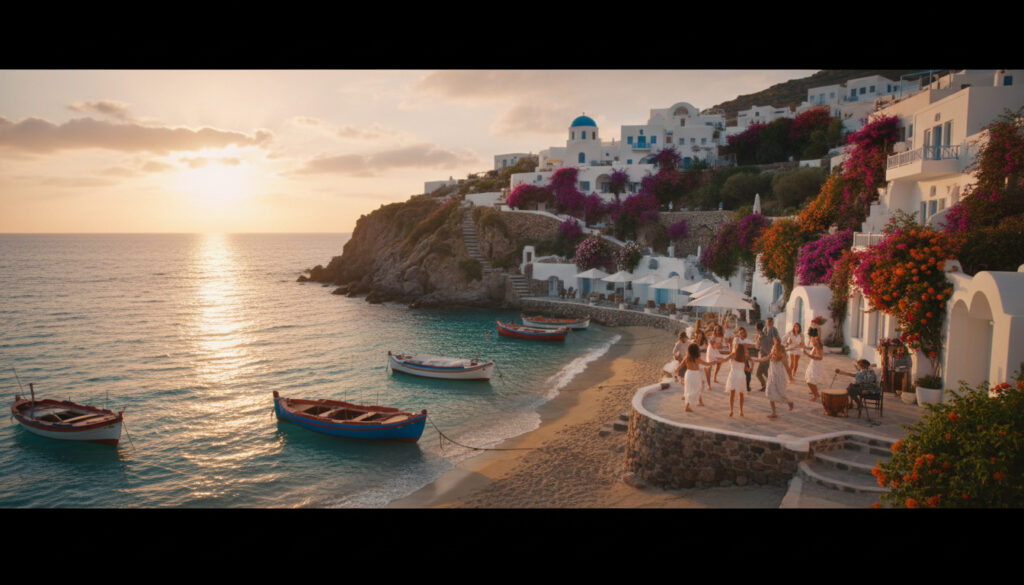
Mamma Mia! Here We Go Again arrived in theaters ten years after the original, offering audiences a dual narrative that functions simultaneously as sequel and prequel. The 2018 musical expands upon the Greek island mythology established in the 2008 hit, weaving between Sophie’s present-day struggles to honor her mother’s legacy and 1979 flashbacks revealing how Donna Sheridan discovered both her paradise and the three men who would change her life forever.
Directed by Ol Parker in his feature directorial debut, the film reunites the original ensemble while introducing younger counterparts to portray the beloved characters during their Oxford University days. The result maintains the escapist energy that defined Mamma Mia! while adding layers of emotional resonance through its exploration of grief, inheritance, and maternal bonds.
The sequel operates on two distinct timelines, exploring both the origins of Donna’s adventures and the continuation of her daughter Sophie’s story on the fictional island of Kalokairi.
What Is Mamma Mia 2?
Released in 2018, Mamma Mia! Here We Go Again serves as both a direct sequel to the 2008 film and a prequel exploring the backstory of Meryl Streep’s character. The narrative structure alternates between two periods: the present day, where Sophie Sheridan navigates personal and professional challenges while preparing to reopen her mother’s hotel, and 1979, where young Donna Sheridan graduates from Oxford and embarks on the journey that leads to Sophie’s conception.
| Release July 20, 2018 |
Director Ol Parker |
Budget $40 million |
Worldwide Gross $395 million |
The film distinguishes itself from typical musical sequels through several key characteristics:
- Hybrid Narrative Structure: Simultaneously continues Sophie’s story while revealing Donna’s previously unseen history through extensive flashbacks.
- Expanded Musical Catalog: Incorporates 18 ABBA tracks with new arrangements, compared to the original film’s smaller selection.
- Generational Casting Approach: Lily James leads the 1979 sequences as young Donna, while Meryl Streep appears in a limited but pivotal capacity as the present-day character.
- Strategic Location Substitution: Croatian coastal towns and islands stand in for the Greek setting, with additional photography in United Kingdom studios.
- Commercial Performance: Generated nearly ten times its production budget, establishing it among the most profitable musical sequels in recent cinema history.
- Pre-Production Recording: Vocal performances were recorded prior to principal photography to allow for live singing during filming.
- Legacy Casting Addition: Cher appears as Ruby Sheridan, Donna’s mother, introducing a previously unmentioned family connection.
| Fact | Details |
|---|---|
| Runtime | 114 minutes |
| Rating | PG-13 |
| Genre | Musical/Romance |
| Studio | Universal Pictures |
| Release Date (US) | July 20, 2018 |
| Director | Ol Parker |
| Screenplay | Ol Parker and Catherine Johnson |
| Music | Songs by ABBA |
| Production Budget | $40 million |
| Worldwide Box Office | $395 million |
Mamma Mia 2 Cast and Crew
The ensemble balances returning veterans with newcomers tasked with embodying familiar characters during their formative years. IMDb credits list over thirty speaking roles, with the primary narrative focusing on two distinct timelines.
The Dual Donna
Lily James portrays young Donna Sheridan across the 1979 sequences, capturing the character’s graduation from Oxford University through her arrival on Kalokairi. Meryl Streep appears as the present-day Donna in a limited capacity, with the narrative establishing her character’s death prior to the main events. Amanda Seyfried returns as Sophie Sheridan, now managing the Hotel Bella Donna while navigating pregnancy and marital tension.
The Potential Fathers
The three men who could be Sophie’s biological father appear in both timelines. Pierce Brosnan, Colin Firth, and Stellan Skarsgård reprise their roles as Harry, Sam, and Bill in the present day. Their younger counterparts—Jeremy Irvine as Harry, Josh Dylan as Sam, and Hugh Skinner as Bill—appear in the flashback sequences depicting their initial encounters with Donna.
Supporting Ensemble
Christine Baranski and Julie Walters return as Tanya and Rosie, Donna’s former bandmates and Sophie’s current supporters. Jessica Keenan Wynn and Alexa Davies portray the younger versions of these characters. Cher appears as Ruby Sheridan, while Andy García plays Fernando, the hotel manager with unexpected connections to Donna’s past.
Young actors underwent extensive vocal training to match the singing styles of their older counterparts, with particular attention paid to maintaining character consistency across the fifty-year age gap between timelines.
Mamma Mia Here We Go Again Plot Summary
The narrative structure alternates between two distinct periods, using the preparations for a grand hotel reopening as the anchor for the present-day storyline while flashbacks reveal the romantic entanglements that resulted in Sophie’s paternity mystery.
Present Day Events
Sophie Sheridan prepares to inaugurate the Hotel Bella Donna, renamed in honor of her late mother Donna. She navigates complications including a storm threatening the event, her husband Sky’s absence due to business in New York, and her relationship with one of her potential fathers, Sam, who has remained on the island. The narrative emphasizes Sophie’s determination to realize her mother’s vision while processing her grief and stepping into maternal responsibilities herself.
The 1979 Odyssey
Flashbacks trace young Donna’s journey from Oxford graduation through her arrival on Kalokairi. She encounters Harry Bright during a performance of “Waterloo” in Paris, shares a flirtatious boat journey with Bill Anderson, and develops a intense romance with Sam Carmichael that ends abruptly when she discovers his engagement to another woman. Each encounter features prominently in the musical numbers and establishes the paternity questions that drive the original film’s plot.
The Celebration and Resolution
The timelines converge during the hotel’s opening celebration, which also serves as a christening for Sophie’s son. Donna’s mother Ruby arrives unexpectedly, revealing her own past with Fernando. The film concludes with a spectral appearance by Donna’s spirit offering maternal blessing, followed by an ensemble performance celebrating the hotel’s success and the family’s continued bonds.
Release Date and Box Office Performance
Universal Pictures distributed the film with a strategic summer release positioning designed to capture the musical audience and vacation-season demographics. The box office performance significantly exceeded projections based on the original film’s success.
The film opened domestically on July 20, 2018, facing competition from other summer releases but finding its audience through strong word-of-mouth among established fans. International markets provided the majority of the revenue, with particularly strong performances in the United Kingdom, Australia, and European territories where ABBA’s catalogue maintains cultural prominence.
The $395 million worldwide gross against a $40 million production budget represents nearly a ten-to-one return on investment, placing the film among the most financially successful live-action musicals of the 2010s.
Where to Watch Mamma Mia 2
Availability varies by region and shifts according to licensing agreements between studios and streaming platforms. The film has rotated through various subscription services since its theatrical run concluded and physical media release.
Current options include digital rental and purchase through major platforms, with the soundtrack available on Spotify and video clips accessible via YouTube playlists. Premium cable networks and subscription services including Max, Prime Video, or Disney+ may carry the film depending on current distribution contracts and territorial restrictions.
Streaming availability changes frequently due to licensing rotations; viewers should verify current status on their preferred platforms as specific service availability cannot be guaranteed beyond the theatrical release window.
Songs in Mamma Mia Here We Go Again
The official soundtrack features eighteen ABBA compositions, several of which appeared in the original stage musical but were omitted from the first film. The selections span ABBA’s entire discography, from early hits like “Waterloo” to later tracks such as “The Day Before You Came.”
Lily James performs the majority of the 1979 flashback numbers, including “When I Kissed the Teacher,” “I Have a Dream,” and “Mamma Mia.” The ensemble cast participates in “Dancing Queen,” while Cher and Andy García perform “Fernando” as a duet. Meryl Streep delivers “The Day Before You Came” and participates in “My Love, My Life” alongside James and Amanda Seyfried.
Additional material recorded for the film but not included in the primary soundtrack release includes acapella versions of “Thank You for the Music” and “SOS,” along with background arrangements of “Hasta Mañana” and “Hole in Your Soul.” These appear in the film’s underscore or as brief vocal moments.
Production and Development Timeline
The sequel’s development followed a decade after the original’s release, with pre-production activities spanning multiple years to coordinate the complex dual-timeline narrative and ensemble cast schedules.
- : Original Mamma Mia! releases in July, establishing the film franchise and grossing over $600 million worldwide.
- : Universal Pictures officially confirms sequel development, with Judy Craymer and Gary Goetzman returning as producers.
- : Ol Parker announced as director and co-writer; Lily James confirmed for the role of young Donna.
- : Principal photography begins on location in Croatia and at Shepperton Studios in the United Kingdom.
- : Vocal tracks recorded prior to filming to allow actors to perform live on set.
- : Worldwide theatrical release in standard and IMAX formats.
Established Facts vs Open Questions
While substantial documentation exists regarding the production and release, certain aspects of the franchise’s future remain speculative.
| Verified Information | Uncertain or Unconfirmed |
|---|---|
| Released July 20, 2018 with $395 million worldwide gross | Development status of a third installment remains officially unannounced |
| Features exactly 18 ABBA songs on the official soundtrack | Long-term streaming availability on specific subscription platforms |
| Filmed primarily in Croatia and United Kingdom studios | Potential return of specific cast members for future projects |
| Ol Parker directed from his screenplay co-written with Catherine Johnson | Whether the franchise will expand to television or stage sequel formats |
Cultural Legacy and ABBA Revival
The film represents a significant entry in the jukebox musical genre, utilizing pre-existing pop catalogues to drive narrative rather than original compositions. ABBA’s music, originally recorded between 1972 and 1982, gained renewed chart presence following the film’s release, with streaming numbers for tracks like “Fernando” and “The Name of the Game” increasing substantially.
The dual-timeline structure allowed the franchise to explore themes of legacy and inheritance while introducing the music to younger demographics unfamiliar with the original 1970s recordings. The casting of contemporary performers like Lily James alongside established stars created bridge content accessible to multiple generations.
The film’s success reinforced the commercial viability of musical sequels, particularly those leveraging nostalgia while introducing new narrative elements. Its approach to handling the absence of a central character from the original film—through flashback expansion and spectral presence—provided a template for franchises navigating the loss of key performers.
Critical Reception and Industry Response
Critical aggregation indicates a 78% approval rating, with reviewers noting the film’s infectious energy and successful musical arrangements while acknowledging narrative thinness compared to traditional dramatic standards. Particular praise centered on Lily James’s vocal performances and the chemistry among the younger cast members.
Some criticism focused on the plot’s reliance on coincidence and the variable singing abilities of certain returning cast members. However, the general consensus recognized the film’s achievement of its primary goal: delivering escapist entertainment built on familiar pop standards. Industry publications noted the efficient production budget relative to the box office return as a model for mid-budget studio filmmaking.
Final Thoughts
Mamma Mia! Here We Go Again succeeds by embracing its hybrid identity as both celebration and elegy. The film honors the legacy established by Mamma Mia! while expanding the narrative canvas to explore the generation that preceded the characters audiences first encountered in 2008. Whether approached as a musical experience, a continuation of familiar stories, or an introduction to ABBA’s catalogue for younger viewers, the production maintains a specific emotional sincerity beneath its glossy surface.
Common Questions
Is there a Mamma Mia 3?
As of 2024, no official announcement confirms development of a third film. While cast members have expressed interest, studio confirmation remains pending.
How does Mamma Mia 2 differ from the original?
The sequel incorporates 18 ABBA songs compared to the original’s smaller selection, utilizes a dual timeline structure, and introduces younger actors portraying familiar characters during their youth.
Was the film actually shot in Greece?
Despite the story setting on the fictional Greek island Kalokairi, production filmed primarily in Croatia and United Kingdom studios to accommodate logistical requirements.
Why does Meryl Streep have limited screen time?
The narrative establishes that Donna Sheridan has died, allowing Sophie to inherit the hotel while flashbacks explore Donna’s youth through Lily James’s portrayal.
Who performs “Fernando” in the movie?
Cher and Andy García perform “Fernando” during the sequence where Ruby Sheridan arrives unexpectedly and reconnects with her former lover.
How many songs feature Lily James?
Lily James leads or contributes to approximately ten musical numbers, including “When I Kissed the Teacher,” “Waterloo,” and “Mamma Mia.”
More related posts
 Linkin Park Brisbane 2026: Times, Setlist & Support
 Andrew Place Clinic: Bundoora & Mill Park GPs, Fees
 Robert Kardashian: Life, Death, Will and Inheritance
 3500 USD to AUD: Current Exchange Rate & Conversion Tips
 Jim Henson: Life, Death, and Complex Legacy
 Dustin Martin: Career, Retirement, Father’s Story
 The Voice Australia 2025: Winner, Judges, Finalists & Results
 Bridget McKenzie: Age, Family, Political Career
