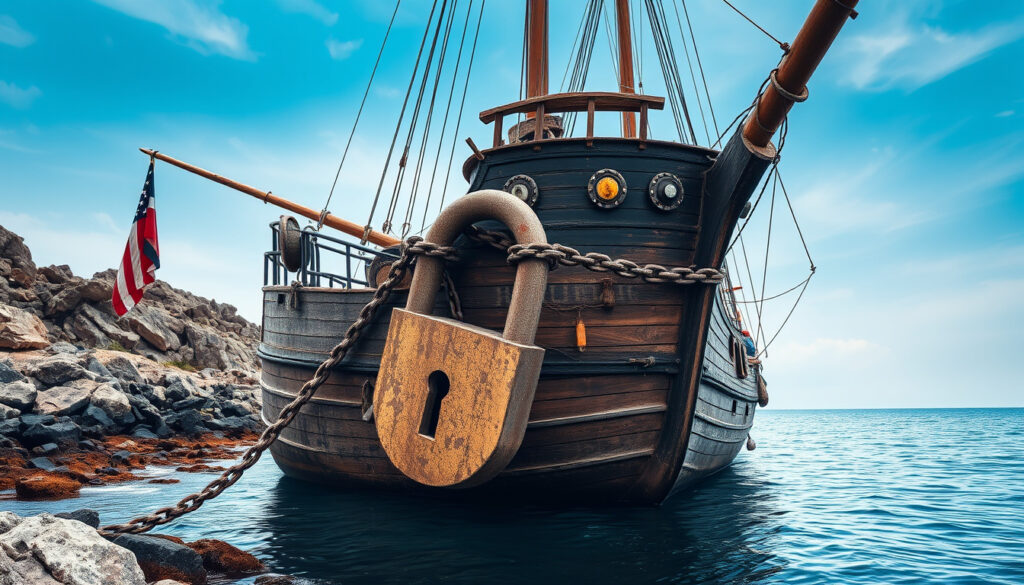
Matthew Flinders: Navigator Named Australia, Jailed 6 Years
There is something quietly astonishing about a man who sailed around an entire continent, named it, and still died largely forgotten. Matthew Flinders was that rare blend of brilliant navigator and unlucky traveler — the one who mapped Australia’s coastline from HMS Investigator, only to spend years rotting in a French prison on Mauritius.
Born: 16 March 1774 ·
Died: 19 July 1814 ·
Circumnavigation: 1802–1803 ·
Imprisonment duration: 6 years 3 months ·
Grave rediscovered: 2019 ·
Famous companion: Cat Trim
Quick snapshot
- First circumnavigation of Australia (Royal Navy)
- Imprisoned 6½ years on Mauritius (State Library of South Australia)
- Grave found in 2019 under London station (Australian Dictionary of Biography)
- Precise cause of death still debated (fever vs. infection) (Britannica)
- Some map details remain contested among historians (Britannica)
- 1801–1803: Circumnavigation of Australia (Royal Museums Greenwich)
- 1804–1810: Imprisoned on Mauritius (World History Encyclopedia)
- 2019: Grave rediscovered near Euston (Australian Dictionary of Biography)
- 2024 reburial in Donington with full naval honours (Royal Navy)
- HS2 continued memorial plans near Euston (Royal Navy)
Eight key facts, one pattern: Flinders packed more achievement and misfortune into 40 years than most do in a lifetime. The numbers tell a story of exploration, captivity, and a very late homecoming.
These stats hint at the forces that shaped his life, from his birth in England to his final recognition two centuries later.
| Label | Value |
|---|---|
| Full Name | Captain Matthew Flinders |
| Born | 16 March 1774, Donington, Lincolnshire, England |
| Died | 19 July 1814, London, England |
| Nationality | British |
| Known for | First circumnavigation of Australia, naming Australia |
| Notable Achievement | Circumnavigated and mapped Australia in HMS Investigator |
| Imprisonment | 6 years 3 months on Mauritius (1804–1810) |
| Grave Discovery | Rediscovered in 2019 beneath a London railway |
What is Matthew Flinders most famous for?
Flinders’ name sits on maps, a university, and countless Australian landmarks — but the core achievement is singular: he was the first to sail all the way around mainland Australia and prove it was one continent. That journey, aboard HMS Investigator from 1801 to 1803, rewrote the geography of the South Pacific.
Circumnavigation of Australia
Flinders set sail from England in July 1801, commanding HMS Investigator, a 334-ton collier refitted for exploration. Over the next 20 months, he and his crew traced the entire coastline, filling in blank patches that had puzzled cartographers since Dutch explorers first glimpsed the land in the 1600s. As the Royal Navy (UK government maritime authority) notes, Flinders is “recognized as the first person to circumnavigate the Australian mainland coastline.” This wasn’t a simple lap — the Investigator hugged the shore, taking soundings and bearings, often in treacherous waters. The expedition proved that Australia was a distinct landmass, not joined to New Guinea or Antarctica, a question that had lingered for centuries.
Flinders didn’t just sail around Australia — he closed a 200-year cartographic question. For the British Admiralty, his charts became the foundation of all later navigation in the region.
Mapping the coastline
The maps Flinders produced were astonishingly accurate for the era. He charted Bass Strait (named after his close friend and fellow surgeon George Bass), the Great Australian Bight, and the entire eastern coastline, correcting errors that went back to Captain Cook’s earlier surveys. According to Royal Museums Greenwich (the UK’s premier maritime museum), Flinders’ mapping “was foundational to later British nautical and geographic knowledge of the continent.” His charts remained in use for decades, and many of his place names — including Flinders Ranges and Flinders Island — survive today.
Naming Australia
Before Flinders, the landmass was commonly called “New Holland” by Europeans, a name Dutch explorers had given. Flinders had a better idea. In his 1814 book A Voyage to Terra Australis, he argued for “Australia” — from the Latin australis (southern) — as a more fitting name. As Royal Museums Greenwich puts it, Flinders “popularized the name Australia through his published work.” The British Admiralty officially adopted the name in 1824, a decade after his death. The irony: Flinders himself never saw Australia become a nation — he died convinced his life’s work had been forgotten.
The implication: Flinders’ choice of name reshaped the continent’s identity, a linguistic shift that still defines it today.
Why was Matthew Flinders jailed?
For more than six years, the man who had mapped an entire continent sat in a French prison on the Indian Ocean island of Mauritius. The reason: a broken ship, bad timing, and a French governor who suspected him of espionage.
Suspicion of espionage
Flinders’ troubles began in 1803, after his beloved HMS Investigator was deemed unseaworthy. He took command of HMS Cumberland, a much smaller vessel, and set sail for England. The Cumberland was in terrible shape — the State Library of South Australia (government heritage collection) notes it “was too small and leaked extensively,” forcing Flinders to stop at Île de France (now Mauritius) for repairs. Britain and France were at war at the time, but Flinders carried a scientific passport from the French government, which should have guaranteed safe passage. The governor of Mauritius, General Charles Decaen, was not convinced. Suspecting Flinders was a spy gathering intelligence under cover of science, Decaen ordered his arrest.
Return voyage to England
Flinders had every reason to believe he would be released quickly. He had his passport, his charts, and his diaries. But Decaen was a hard man, and the political climate was volatile. Flinders would spend the next six years and three months under house arrest or in detention, forbidden to leave the island. As World History Encyclopedia (a respected historical reference) reports, he was “detained by French authorities in Mauritius for nearly seven years.” During this time, Flinders continued to work on his charts and write his memoirs — a remarkable act of discipline under confinement.
Flinders’ scientific passport, meant to protect him, became a curse. Decaen saw it as a cover, not a guarantee. The navigator’s meticulous journal-keeping — the same habit that made his maps great — convinced the governor he was recording military secrets.
Detention on Mauritius
Life in captivity was hard on Flinders. He was allowed some liberty — he lived in a house rather than a cell — but he could not leave the island. His health, never robust after years at sea, began to fail. It took Napoleon’s defeat and the end of the war in 1810 for Flinders to finally be released. He returned to England in October 1810, a free man but a broken one. The South Australian Government (state heritage authority) notes that “Flinders’ health never fully recovered after imprisonment on Mauritius.” He had just four years left to live.
Why did Matthew Flinders name Australia Australia?
The name “Australia” didn’t come from a government decree — it came from a navigator’s book, a Latin root, and a lot of persistence. Flinders didn’t invent the word, but he made it stick.
Origin of the name
The word “Australia” had been used occasionally since the early 1600s, derived from Latin Terra Australis Incognita — “Unknown Southern Land.” But it was not the standard name for the continent. Most maps and documents called it New Holland. Flinders had a different vision. In a letter to his brother in 1804, he wrote: “I call the whole island Australia, or Terra Australis.” He was making a case not just for a name, but for an identity — a single continent, not a collection of colonies.
Flinders’ Terra Australis
Flinders’ book A Voyage to Terra Australis was his masterstroke. Published in 1814 — the very day he died, according to Britannica (a leading encyclopedia) — the book presented his charts, his observations, and his preferred name for the continent. Royal Museums Greenwich confirms that Flinders “popularized the name Australia through his published work Voyage to Terra Australis.” The title used the Latin form, but the book itself argued for the English version.
Publication of ‘A Voyage to Terra Australis’
The timing of the book’s publication was tragic. Flinders died on 19 July 1814, the same day it was released. He never knew that his name for the continent would become official, or that his maps would be used for generations. The British Admiralty adopted “Australia” formally in 1824. As the Mariners’ Museum (a respected maritime history institution) points out, Flinders’ expedition “helped demonstrate that Australia was a continent in its own right rather than part of a larger landmass.” The name was the logical conclusion.
What did Matthew Flinders discover?
Flinders’ discoveries went beyond the coastline. He charted, named, and mapped places that are still on maps today, and he corrected errors that had persisted since the first Dutch sightings in the 1600s.
Major geographical discoveries
- Bass Strait: Flinders and George Bass charted the strait separating mainland Australia from Van Diemen’s Land (Tasmania) in 1798–99, proving Tasmania was an island. The strait was named after Bass, but Flinders’ survey made it navigable.
- Flinders Ranges: The mountain range in South Australia was named after him by later explorers, a tribute to his foundational mapping.
- Great Australian Bight: Flinders charted this vast southern coastline, filling in one of the last empty sections on the map.
According to Britannica (a leading encyclopedia), Flinders’ “charts of the Australian coastline were so accurate they were used by navigators for decades.”
Flinders’ charts
Flinders was one of the first navigators to combine celestial navigation with systematic coastal triangulation. His charts were not just sketches — they were precise, measured maps with depth soundings, landmarks, and notes on hazards. The National Portrait Gallery of Australia (federal cultural institution) notes that Flinders “first arrived in Australia at age 20 with surgeon George Bass” and almost immediately began mapping. His charts of Bass Strait alone saved countless shipwrecks by giving captains a safe route.
Scientific contributions
Beyond geography, Flinders contributed to navigation science. He studied compass deviations caused by iron in ships — a problem that had plagued navigators for centuries. The “Flinders bar,” a vertical soft-iron bar used in compass correction, is named after him. He also collected specimens of plants and animals, many of which were new to European science, and his journals recorded detailed observations of Aboriginal cultures he encountered along the coast.
Flinders was a scientist first, an explorer second. His compass corrections saved lives for generations. For modern navigators, his contribution is invisible but vital: every ship that corrected its deviation using a Flinders bar owes him a debt.
Where was Matthew Flinders’ grave found?
For nearly 180 years, the final resting place of one of Britain’s greatest navigators was lost — literally buried under a railway station. The rediscovery in 2019 was an archaeological sensation.
Original burial
Flinders died on 19 July 1814 at age 40, just a day after the publication of his life’s work. He was buried in the graveyard of St James’s Church in Camden, London. At the time, it was a quiet churchyard on the edge of the city. But 19th-century London was expanding fast, and the churchyard stood in the path of progress.
Lost grave in London
By the mid-1800s, railway construction — the London to Birmingham line — ran directly through the site. Wikipedia (community-maintained reference) records that “his grave location was lost by the mid-19th century.” The headstones were removed, the ground was leveled, and Flinders’ remains lay forgotten under what later became Euston Station. Generations of historians searched for the grave without success.
Discovery in 2019
In January 2019, archaeologists working ahead of the HS2 high-speed rail project near Euston Station made a remarkable find: a lead plate bearing the name “Matthew Flinders.” According to the Australian Dictionary of Biography (Australia’s official biographical reference), the remains were “identified by a lead plate bearing his name.” The discovery made headlines worldwide. For Australia, it was a national moment — the explorer who had named the continent was coming home, in a sense. HS2 announced in October 2019 that Flinders would be reinterred in Donington, Lincolnshire, the village where he was baptized. In July 2024, the Royal Navy (UK government maritime authority) performed the reburial with full honours — a ceremony 210 years overdue.
The same factor that lost Flinders’ grave — industrial expansion — also found it. HS2, one of the most controversial infrastructure projects in British history, became the unlikely archaeologist that reunited Flinders with his birthplace.
What are some fun facts about Matthew Flinders?
For a man who spent years in prison and died at 40, Flinders had an unexpectedly rich personal life — including a famous cat, a musical talent, and a devoted family.
His cat Trim
Flinders adored his cat Trim, a black-and-white ship’s cat who sailed with him on HMS Investigator and survived shipwrecks, storms, and captivity on Mauritius. Trim was a skilled mouser, a companion, and, according to Flinders, a creature of “superior intelligence.” Flinders wrote a biography of Trim after the cat disappeared on Mauritius (likely eaten by a starving slave). A bronze statue of Trim sits on the windowsill of the State Library of New South Wales in Sydney, and another statue stands on the Flinders statue outside the library. The Royal Museums Greenwich notes that Trim’s story has made the cat “almost as famous as Flinders himself.”
Flute playing
Flinders played the flute, and he often used music to pass the long hours at sea and in captivity. His letters mention playing the flute to relieve stress and to entertain his fellow officers. It was a small, human detail in a life dominated by maps and instruments.
Personal life
Flinders married Ann Chappelle in 1801, just before he set sail on HMS Investigator. He was gone for nearly a decade, and the couple spent only a few months together before his imprisonment on Mauritius. They had one daughter, Anne, whom Flinders never met — he died before she was old enough to remember him. According to the National Portrait Gallery of Australia, Flinders’ personal story is one of “extraordinary achievement shadowed by personal tragedy.” He wrote to Ann constantly from prison, sending letters that rarely arrived.
Flinders’ cat Trim is not just a cute footnote — it’s a window into the explorer’s humanity. In a life of rigorous science and brutal politics, the cat was his emotional anchor. The statue of Trim in Sydney is a reminder that exploration is not just about maps, but about the people — and animals — who made them.
Timeline
- 16 March 1774: Born in Donington, Lincolnshire (ABC Behind The News (Australian public broadcaster))
- 1789: Joined the Royal Navy at age 15 (National Portrait Gallery of Australia)
- 1791–1793: Served under Captain Bligh on HMS Providence
- 1795: First arrived in Australia (Port Jackson) (National Portrait Gallery of Australia)
- 1801–1803: Commanded HMS Investigator; first circumnavigation of Australia (Royal Museums Greenwich)
- 1803: Shipwrecked on the Great Barrier Reef; returned to Sydney
- 1804: Imprisoned on Mauritius after requesting a passport (State Library of South Australia)
- 1810: Released and returned to England
- 19 July 1814: Died in London; published A Voyage to Terra Australis the same day (Britannica)
- 2019: Grave rediscovered during HS2 excavations (Australian Dictionary of Biography)
- 2024: Reburied in Donington with full naval honours (Royal Navy)
Confirmed facts
- Birth and death dates confirmed by ABC Behind The News
- Circumnavigation details verified by Royal Navy
- Imprisonment on Mauritius documented by State Library of South Australia
- Publication of his book recorded by Britannica
- Grave rediscovery in 2019 confirmed by Australian Dictionary of Biography
What’s unclear
- Precise cause of death remains debated (fever vs. urinary tract infection) — Britannica notes the uncertainty
Quotes
“I call the whole island Australia, or Terra Australis.”
Matthew Flinders, letter to his brother, 1804
“Trim was the most perfect cat I ever knew.”
Matthew Flinders, from his biography of Trim, cited by Royal Museums Greenwich
Flinders died at 40, convinced his work was forgotten, holding a just-published book that would one day define a continent’s name. For his native village Donington, the story ends not with a forgotten grave under a railway, but with a full naval ceremony in 2024 — a homecoming two centuries late. The implication for modern readers: even the most obscure life can be rediscovered, and recognition, however delayed, can still be delivered with dignity.
His remarkable story, including the companionship of Flinders beloved cat Trim, adds a poignant layer to the legacy of the man who first circumnavigated Australia.
Frequently asked questions
How old was Matthew Flinders when he died?
He was 40 years old. He died on 19 July 1814 in London (Royal Navy).
Did Matthew Flinders have a wife?
Yes, he married Ann Chappelle in 1801, just before his voyage on HMS Investigator. They had one daughter, Anne, whom Flinders never met (National Portrait Gallery of Australia).
What ship did Matthew Flinders command?
He commanded HMS Investigator, a 334-ton collier refitted for exploration, on his 1801–1803 circumnavigation of Australia (Royal Museums Greenwich).
Where was Matthew Flinders born?
He was born in Donington, Lincolnshire, England on 16 March 1774 (ABC Behind The News).
What was the name of Matthew Flinders’ cat?
Trim, a black-and-white ship’s cat who sailed with him on HMS Investigator. A statue of Trim exists in Sydney (Royal Museums Greenwich).
Why is Matthew Flinders important to Australia today?
He is the first person known to have circumnavigated Australia, he mapped its coastline with extraordinary accuracy, and he popularized the name “Australia.” His charts were foundational to later navigation and settlement (Britannica).
Related reading:
- Charles Perkins: Activist, Soccer Star, and Freedom Ride Leader – Both are significant Australian historical figures, making this a strong evergreen informational link for readers interested in notable Australian biographies.
- Samuel Johnson: His Life, Dictionary, Quotes, and Biography – Both are prominent 18th/19th-century British-born historical figures with detailed biographical treatment, sharing thematic connections of legacy, biography, and historical impact.
More related posts
 Jasprit Bumrah: Injury, Net Worth, Wife, Stats & More
 Wade Wilson: Murders, Trial, Death Sentence & Latest Updates
 Jason Sudeikis: Biography, Kids, Net Worth and Ted Lasso
 Maisie Williams: Identity, Relationships and Life After GoT
 Peaches Geldof: Death, Children, and Husband Today
 Coffee Table Books – Best Picks and Styling Tips 2024
 Ken Done: Biography, Art Value, Controversy, and FAQs (2024)
 Saint Paul: Biography, Conversion, and Death of the Apostle
