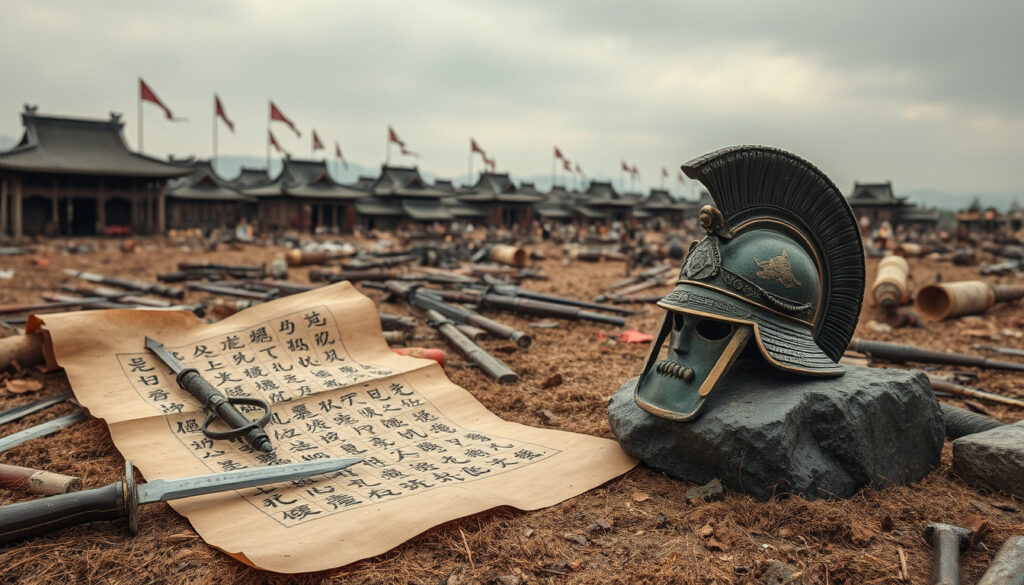
Sun Tzu: Facts, Quotes, The Art of War & Historical Accuracy
Few figures from ancient history are as widely quoted yet as poorly documented as Sun Tzu. The Chinese strategist credited with The Art of War has been invoked by generals, CEOs, and sports coaches for centuries, but the man behind the text remains remarkably elusive. This article separates the verifiable facts from the legends, drawing on the best available historical sources.
Period active: c. 544–496 BCE (Warring States period) ·
Primary work: The Art of War (13 chapters) ·
Claimed IQ (unverified): 165 (Geniuses.club) ·
Role: Military strategist for King Helü of Wu ·
Historical records: Sima Qian’s Records (c. 94 BCE)
Quick snapshot
- Sun Tzu is traditionally credited as author of The Art of War (Britannica biography)
- The text existed by the Han dynasty and contains 13 chapters (Wikipedia overview)
- Sima Qian’s Records of the Grand Historian (c. 94 BCE) is the primary biographical source (World History Encyclopedia)
- Whether Sun Tzu personally commanded battles; the only campaign linked to him is Wu’s invasion of Chu c. 506 BCE (Britannica biography)
- His IQ (165) is unverified and likely an anachronism (Geniuses.club listing)
- Historians debate whether he was a single person or a composite figure (The Historian’s Hut article)
- c. 544 BCE: Born in Qi state (traditional date) (Britannica biography)
- c. 512 BCE: Presents The Art of War to King Helü of Wu (World History Encyclopedia)
- c. 506 BCE: Wu defeats Chu, possibly with Sun Tzu’s involvement (Britannica biography)
- Ongoing scholarly debate about the dating of the text and its authorship (Wikipedia overview)
- New archaeological finds (e.g., 1972 bamboo texts in Linyi) may clarify the historical Sun Tzu (World History Encyclopedia)
Five key facts about Sun Tzu, drawn from the earliest surviving records:
| Label | Value |
|---|---|
| Full name (Chinese) | Sunzi (Sun Tzu) |
| Born | Qi state, c. 544 BCE |
| Died | c. 496 BCE |
| Notable work | The Art of War (Bingfa) |
| Historical record | Sima Qian’s Shiji (c. 94 BCE) |
What was Sun Tzu’s famous quote?
Most cited quote from The Art of War
- The most famous passage is from Chapter 3: “To win one hundred victories in one hundred battles is not the acme of skill. To subdue the enemy without fighting is the acme of skill.” (MIT Internet Classics Archive translation)
- This line encapsulates Sun Tzu’s philosophy of winning without conflict, a principle that has influenced military thought and business strategy alike.
Quote context and variations
- Different translations exist. The MIT version uses the phrasing above, while other editions render “acme of skill” as “supreme excellence.” (Britannica biography)
- The quote is often misattributed to broader contexts on Goodreads and social media, but the original text is explicitly about strategy, not ethics. (Wikipedia overview)
What are the 5 principles of Sun Tzu’s Art of War?
Overview of the five constant factors
- In Chapter 1 (“Laying Plans”), Sun Tzu lists five fundamental factors: Moral Law, Heaven, Earth, Commander, and Method and discipline. (Britannica biography)
- Moral Law refers to the harmony between ruler and people; Heaven covers weather and timing; Earth includes terrain and distance; Commander embodies qualities like wisdom and courage; and Method and discipline involves organization, logistics, and controls. (MIT Internet Classics Archive translation)
Application of principles to modern strategy
- These five factors are often adapted in business and leadership contexts: “Moral Law” becomes company culture, “Heaven” becomes market timing, “Earth” becomes competitive landscape, “Commander” becomes CEO attributes, and “Method” becomes operational processes. (World History Encyclopedia)
- However, some scholars caution that modern analogies oversimplify the original military context. (Wikipedia overview)
Applying Sun Tzu’s five factors to modern business requires careful translation of ancient military concepts. Companies that treat “Moral Law” as mere HR policy miss the deeper emphasis on unity of purpose.
Was Sun Tzu ever defeated?
Historical evidence of Sun Tzu’s battles
- No surviving record describes a defeat for Sun Tzu. The only campaign attributed to him is Wu’s conquest of Chu around 506 BCE. (Britannica biography)
- The Zuo Zhuan, a chronicle of the Spring and Autumn period, does not mention Sun Tzu at all, leading some historians to doubt his existence. (Wikipedia overview)
Legend vs. verifiable records
- Sima Qian’s account (written centuries later) lacks detail on specific outcomes, and the Wu-Chu campaign’s success may have been attributed to Sun Tzu posthumously. (The Historian’s Hut article)
- Scholars note that the absence of a defeat record does not confirm undefeated status; it may reflect the scarcity of reliable sources. (World History Encyclopedia)
What is Sun Tzu’s theory?
Core tenets of The Art of War
- Sun Tzu’s theory emphasizes deception, speed, intelligence, and minimizing conflict. He famously wrote, “All warfare is based on deception.” (MIT Internet Classics Archive translation)
- The text is a systematic guide to strategy and tactics, covering maneuvers, terrain, and the critical role of accurate intelligence. (Britannica biography)
Non-war concept: winning without fighting
- The “acme of skill” quote encapsulates the ideal of subduing the enemy without direct conflict. This concept has been applied to modern “great power competition” and conflict avoidance. (Britannica biography)
- Some scholars argue that the “non-war” ideal is often overstated; the text also extensively discusses siege warfare, troop deployments, and violent confrontation. (Wikipedia overview)
Sun Tzu’s theory is simultaneously a guide to winning wars and a philosophy for avoiding them. Readers who only focus on the “non-war” side miss the brutal realism of the battlefield chapters.
Did Sun Tzu execute concubines?
The concubine execution story from Sima Qian
- Sima Qian’s biography recounts that King Helü of Wu tested Sun Tzu by asking him to train 180 concubines as soldiers. When the women laughed during drills, Sun Tzu executed the two leaders. (World History Encyclopedia)
- The story is often cited as an example of Sun Tzu’s strict discipline.
Historical reliability of the anecdote
- Scholars debate whether the event is factual or allegorical. The narrative appears in Sima Qian’s work, which was written about 400 years after Sun Tzu’s supposed lifetime. (The Historian’s Hut article)
- No contemporary sources corroborate the story, and it may have been invented to illustrate Sun Tzu’s principles. (Wikipedia overview)
Timeline of Sun Tzu’s life and legacy
- – Sun Tzu born in Qi state (traditional date). (Britannica biography)
- – Allegedly presents The Art of War to King Helü of Wu. (World History Encyclopedia)
- – Wu state defeats Chu, campaign possibly involving Sun Tzu. (Britannica biography)
- – Sun Tzu’s death (approximate). (Britannica biography)
- – Sima Qian writes biographical account of Sun Tzu. (Britannica biography)
Confirmed facts
- Sun Tzu is traditionally credited as author of The Art of War; text existed by Han dynasty. (Britannica biography)
- The Art of War contains 13 chapters; ancient sources confirm it. (Wikipedia overview)
What’s unclear
- Whether Sun Tzu personally commanded battles; Sima Qian’s account is centuries later. (The Historian’s Hut article)
- The IQ of Sun Tzu (165 reported by Geniuses.club) is unverified and likely anachronistic. (Geniuses.club listing)
Key perspectives on Sun Tzu
To win one hundred victories in one hundred battles is not the acme of skill. To subdue the enemy without fighting is the acme of skill.
Sun Tzu, The Art of War, Chapter 3 (MIT Internet Classics Archive translation)
If Sima Qian is followed, Sun Tzu was a contemporary of Confucius.
Sima Qian, Records of the Grand Historian, as cited by The Historian’s Hut article
The gap between the legendary Sun Tzu and the historical record is wide, but the core text of The Art of War remains a powerful guide to strategy. For readers seeking to apply its lessons, the key is to treat the book as a product of its time — a time of warring states, limited intelligence, and high stakes. The legends of an undefeated general and a 165 IQ are distractions. The real value lies in the principles: deception, intelligence, and the moral law of leadership.
For historians, the challenge is clear: the next archaeological discovery could rewrite everything we think we know about Sun Tzu. For the rest of us, the best strategy is to read the source text carefully and let the evidence speak.
youtube.com, parade.com, cambridge.org, goodreads.com, facebook.com, amazon.com, youtube.com
Readers curious about the man behind the legend can find a thorough account of Sun Tzus life and legacy.
Frequently asked questions
What is the most famous line from The Art of War?
The most famous line is “To win one hundred victories in one hundred battles is not the acme of skill. To subdue the enemy without fighting is the acme of skill.” (MIT Internet Classics Archive translation)
How many chapters are in The Art of War?
The Art of War contains 13 chapters. (Wikipedia overview)
Is The Art of War still relevant today?
Yes, the text is widely studied in military academies, business schools, and leadership programs. However, its value depends on careful interpretation. (Britannica biography)
Can I download The Art of War as a PDF?
Yes, the text is in the public domain. A reliable translation is available at the MIT Internet Classics Archive.
What does “Sun Tzu” mean in Chinese?
“Sun Tzu” ( ) translates to “Master Sun.” “Sun” is the surname, and “Tzu” ( ) is an honorific meaning “master” or “philosopher.” (Britannica biography)
Are there other books by Sun Tzu besides The Art of War?
No other writings by Sun Tzu survive. The Art of War is his only known work. (World History Encyclopedia)
For more on historical figures whose biographies shaped their eras, see Martin Luther: The Monk Who Sparked the Protestant Reformation and Samuel Johnson: His Life, Dictionary, Quotes, and Biography.
More related posts
 Christina Applegate’s MS: Diagnosis, Mobility, and Net Worth
 Carl Sagan: Biography, Controversies, and Legacy
 Maisie Williams: Identity, Relationships and Life After GoT
 John Walker: Marvel, Spy, Runner, and Whiskey – Who Was He
 Sophie Lee: Actress, Author, and Love Island 2025 Contestant
 Advantan Fatty Ointment: Uses, Strength, Prescription & More
 Zucchini Fritters Recipe: Easy, Crispy, and Perfect Every Time
 Why Did WWE Erase Chris Benoit? Estate, Brain Damage, and Legacy
