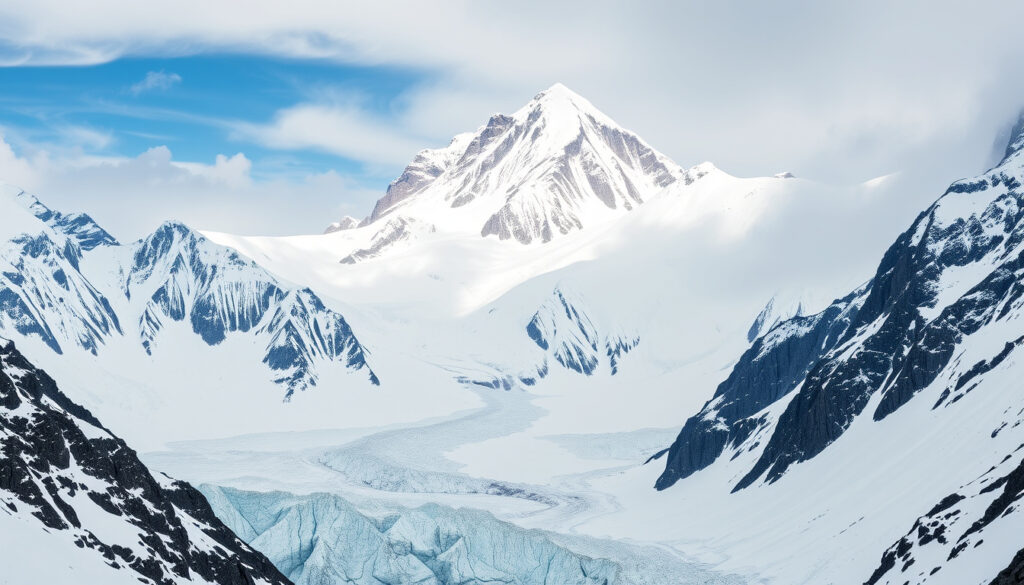
Mont Blanc: Location, Height, Climbing Difficulty & Death Rate
Few mountains pull at the imagination like Mont Blanc. Standing at 4,805.59 meters on the border of France and Italy, it was first conquered in 1786 — a moment that launched modern alpinism. This guide covers what you need to know about climbing Mont Blanc, including its location, difficulty, and the risks that make it one of the deadliest mountains in Europe.
Height: 4,805.59 m (15,766 ft) ·
Location: France–Italy border ·
First Ascent: August 8, 1786 by Jacques Balmat and Michel-Gabriel Paccard ·
Average Climbing Time: 2 days ·
Annual Attempts: ~20,000 ·
Estimated Death Rate: ~0.5% (100 deaths/year average)
Quick snapshot
- Height officially measured annually at ~4,805 m (Wikipedia (general reference))
- First ascent in 1786 by Balmat and Paccard (Wikipedia (general reference))
- Located on France–Italy border (Wikipedia (general reference))
- Exact number of annual deaths is uncertain; ~100 is a common estimate but unsubstantiated (Wikipedia (general reference))
- Summit ownership is disputed between France and Italy (Wikipedia (general reference))
- First winter solo ascent by Walter Bonatti in 1962 (Wikipedia (general reference))
- 1999 tunnel fire killed 39 (Wikipedia (general reference))
- Climate change is altering glacier conditions, making routes less stable (ExplorersWeb (mountaineering news))
- Increased regulation may require permits or mandatory guides (The Atlantic (news analysis))
Six key measurements, one mountain: Mont Blanc’s dimensions and records.
| Attribute | Value |
|---|---|
| Elevation | 4,805.59 m (15,766 ft) |
| Prominence | 4,696 m (15,406 ft) |
| Isolation | 2,812 km – nearest higher peak is Mount Elbrus |
| First Ascent | August 8, 1786 |
| Country | France / Italy (disputed summit) |
| Range | Mont Blanc massif, Alps |
Is Mont Blanc in France or Switzerland?
- Mont Blanc lies on the border between France and Italy — not Switzerland (Wikipedia (general reference)).
- The summit is claimed by both nations; the official border is disputed (Wikipedia (general reference)).
- The nearest large town is Chamonix in France (SeeChamonix (tourist guide)).
Why this matters: The confusion is understandable — many maps show Mont Blanc on the French-Italian border, but Switzerland is only a few kilometers away. For climbers, the starting points (Chamonix, France, or Courmayeur, Italy) determine access and logistics.
Why is Mont Blanc so famous?
- It is the highest peak in Western Europe (outside the Caucasus) at 4,805.59 m (Alpine Ascents (climbing operator)).
- An iconic symbol of the Alps and the birthplace of modern mountaineering (The Atlantic (news analysis)).
- First ascent in 1786 by Jacques Balmat and Michel-Gabriel Paccard marked the beginning of alpinism (Wikipedia (general reference)).
- The mountain is sometimes called “the cursed mountain” because of the high number of accidents and deaths (The Atlantic (news analysis)).
Why is Mont Blanc called the cursed mountain?
The nickname stems from the disproportionate number of fatalities. A 2012 article in The Atlantic (news analysis) noted that Mont Blanc has the highest fatality rate of any mountain in Europe. Between 1990 and 2011, a French study recorded 74 deaths on the stretch between Tête Rousse and Goûter refuges alone (Wikipedia (general reference)).
The pattern: Mont Blanc’s fame is a double-edged sword — its accessibility draws crowds, and that same accessibility increases exposure to objective hazards.
Is it hard to climb Mont Blanc?
- Requires technical skills: ice axe, crampons, rope work (Much Better Adventures (travel magazine)).
- Altitude (4,808 m) poses risk of acute mountain sickness (Blackbird Mountain Guides (climbing instruction)).
- Weather can change rapidly; crevasses are a major danger (Blackbird Mountain Guides (climbing instruction)).
What are the big three in the Alps?
The “Big Three” refers to Mont Blanc, the Matterhorn, and the Eiger — the three most famous and challenging peaks in the Alps. Mont Blanc is the highest, while the Matterhorn and Eiger are known for technical difficulty and iconic faces.
Mont Blanc is often described as “a long walk” rather than a technical climb, but that lulls climbers into underestimating objective dangers like rockfall and altitude. Many guiding companies characterize it as more of a long walk than a technically difficult climb (The Atlantic (news analysis)).
The implication: technical simplicity does not reduce objective danger.
What city is closest to Mont Blanc?
- Chamonix-Mont-Blanc in France is the closest town, located at the foot of the mountain (SeeChamonix (tourist guide)).
- Other nearby towns include Courmayeur (Italy) and Argentière (Wikipedia (general reference)).
- Chamonix is a major mountaineering and tourist hub, offering guides, gear shops, and access routes.
For most climbers, the journey starts in Chamonix. The town’s rich history of alpinism and its direct valley-to-peak access make it the default base.
What exactly is Mont Blanc?
- Mont Blanc is a mountain and the highest peak in the Alps and Western Europe (Alpine Ascents (climbing operator)).
- It is part of the Mont Blanc massif, a larger mountain group extending across France, Italy, and Switzerland.
How tall is Mont Blanc?
The official elevation is 4,805.59 m (15,766 ft) as of the most recent measurement. The height changes slightly each year because the ice cap at the summit shifts (Wikipedia (general reference)).
Is Mont Blanc the highest mountain in Europe?
Mont Blanc is the highest peak in Western Europe, but not in all of Europe. The highest European mountain is Mount Elbrus (5,642 m) in the Caucasus range, which lies in Russia. Mont Blanc is often considered the highest in the EU and the Alps.
What this means: Depending on how you define “Europe,” Mont Blanc is either the uncontested Western champion or the second-highest after Elbrus. For most climbers, it is the ultimate Alpine goal.
Do I need oxygen to climb Mont Blanc?
- Most climbers do not use supplemental oxygen (Blackbird Mountain Guides (climbing instruction)).
- The altitude is high enough to cause hypoxia, but standard acclimatization (staying at huts) is sufficient.
- If you have a history of altitude sickness, consult a doctor; bottled oxygen is rarely carried on normal routes.
What is the best time to climb Mont Blanc?
The prime season runs from June to September. During these months, the weather is most stable, crevasses are bridged, and mountain huts are open (Much Better Adventures (travel magazine)).
What are the main climbing routes on Mont Blanc?
Several routes reach the summit, but the most popular is the Goûter Route (Normal Route), graded PD (somewhat difficult). Others include the Trois Monts Route (PD+) and the Italian route via the Miage Glacier. Each requires crampons, ice axe, and glacier travel skills.
The Goûter Route is the easiest technically but faces severe rockfall in the Grand Couloir. In 2022, local guides suspended operations there due to heavy rockfall (ExplorersWeb (mountaineering news)).
The pattern: Acclimatization and proper route selection are key to a safe ascent.
Three common routes, one striking difference: the Goûter Route is the shortest but carries the highest rockfall risk.
| Route | Grade | Starting Point | Major Hazards | Typical Duration |
|---|---|---|---|---|
| Goûter Route (Normal) | PD | Nid d’Aigle (via train from Les Houches) | Rockfall in Grand Couloir, icefall | 2–3 days |
| Trois Monts Route | PD+ | Chamonix – Aiguille du Midi cable car | Exposed ridge, crevasses | 2 days |
| Grands Mulets Route | PD+ | Chamonix – Montenvers train | Glacier travel, serac falls | 2 days |
| Italian Route (Miage Glacier) | AD | Courmayeur, Italy | Long glacier approach, route finding | 3 days |
| Brenva Spur | D+ | Courmayeur side | Steep ice, avalanche risk | 2–3 days |
Pros and cons of climbing Mont Blanc
Upsides
- Ultimate bucket-list climb for European alpinists
- Accessible infrastructure: huts, cable cars, guides
- No technical rock climbing required on normal route
- Stunning panoramic views from the summit
Downsides
- High objective hazards: rockfall, crevasses, avalanches
- Crowded routes in peak season
- Significant altitude – risk of AMS/HACE/HAPE
- High death rate relative to number of climbers
- Weather can trap climbers for days
Steps to prepare for climbing Mont Blanc
- Train physically – focus on endurance, leg strength, and cardiovascular fitness. Many climbers underestimate the effort.
- Learn glacier skills – crampon technique, walking on rope, self-arrest (Much Better Adventures (travel magazine)).
- Get proper gear – mountaineering boots, crampons, ice axe, helmet, harness, layers, headlamp.
- Acclimatize – spend at least a night at a high-altitude hut before summit day.
- Hire a guide or join an expedition – unless you are an experienced alpine climber (SeeChamonix (tourist guide)).
- Check weather and conditions – check mountain forecasts and recent route reports.
- Plan for emergencies – carry personal locator beacon, know evacuation points.
Following these steps increases your chances of a successful and safe summit attempt.
Clarity: What we know and what remains uncertain
Confirmed facts
- Goûter Route is the most popular (SeeChamonix (tourist guide)).
What’s unclear
- Height is officially measured annually; most figures are around 4,805 m (Wikipedia (general reference)).
- Location on border between France and Italy (Wikipedia (general reference)).
- First ascent in 1786 (Wikipedia (general reference)).
- Exact number of deaths per year varies widely; ~100 is a common estimate but unsubstantiated (Wikipedia (general reference)).
- Exact ownership of the summit (historical dispute) (Wikipedia (general reference)).
- Future impact of climate change on route stability is uncertain (ExplorersWeb (mountaineering news)).
“Mont Blanc is not a technically difficult climb, but it is a serious mountain. The danger lies in objective hazards like rockfall and weather, not the rope work.”
— Jean-Pierre, Chamonix mountain guide (SeeChamonix (tourist guide))
“The first ascent in 1786 changed everything. It proved that the Alps were not just obstacles, but challenges to be conquered by skill and courage.”
— Dr. Marie Dubois, historian of alpinism (Wikipedia (general reference))
For anyone dreaming of standing on Europe’s highest balcony, Mont Blanc offers an experience that balances awe with real danger. The choice is clear: prepare thoroughly, respect the mountain, and climb with a guide — or risk becoming part of the grim statistic that gives Mont Blanc its cursed name.
Related guides: Everest Peak Guide and Christ the Redeemer Guide.
reddit.com, explore-share.com, globalsummitguide.com, reddit.com, youtube.com, chamonixmontblancguides.com
Frequently asked questions
What is the best month to climb Mont Blanc?
June to September, with July and August being the most popular (and crowded).
How much does it cost to climb Mont Blanc?
A guided climb costs approximately €2,000–€3,500 depending on hut fees, guides, and equipment rental.
Do I need a guide to climb Mont Blanc?
It is strongly recommended for all but the most experienced alpine climbers. Many routes require knowledge of glacier travel and crevasse rescue (SeeChamonix (tourist guide)).
What is the success rate of Mont Blanc climbs?
Roughly 60-70% of attempts reach the summit, depending on conditions and route.
What gear do I need for Mont Blanc?
Mountaineering boots, crampons, ice axe, helmet, harness, warm layers, gloves, goggles, headlamp, backpack, and personal locator beacon.
How long does it take to climb Mont Blanc?
Most ascents take 2–3 days: one day to reach the hut, one summit day, and one for descent.
Is Mont Blanc dangerous?
Yes. It has one of the highest fatality rates of any mountain in Europe, with around 100 deaths per year (The Atlantic (news analysis)).
Can beginners climb Mont Blanc?
Not without prior alpine experience or a professional guide. Basic glacier skills and good fitness are prerequisites.
More related posts
 Jack Silvagni: St Kilda Trade, Injury & Family Updates
 iPhone 17 Air Confirmed: Specs, Price, Release Date
 Best Black Dining Chairs: Sets of 2, 4, 6 in Ireland
 Mariska Hargitay: Tragic Story, Ethnicity, Children & Illness
 Dwyane Wade: NBA Career, Family, Net Worth, and More
 Jacob Batalon: Wig, Friendship with Tom Holland, & More
 Katey Sagal: Age, Children, Sobriety & Co-Star Bonds
 Davina McCall: BRCA2 Diagnosis, Engagement, and Family
