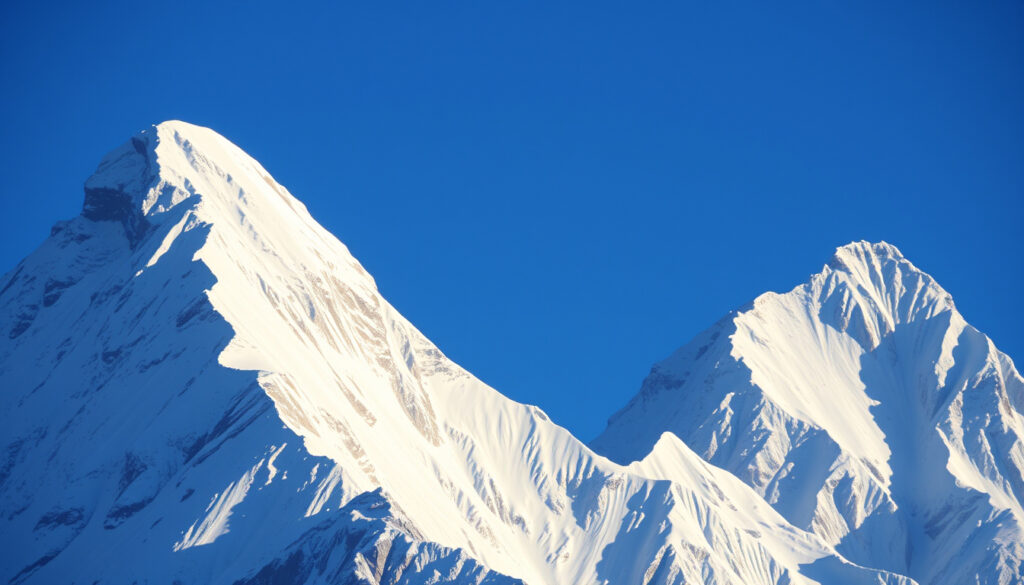
Everest Peak: Height, Climbing Cost, Deaths & K2 Comparison
Most people know Everest as the world’s highest peak, but few realize that its summit comes with a $70,000 price tag and a death toll over 300. The official height settled in 2020 at 8,848.86 meters (29,031.69 feet) ended decades of debate.
Height: 29,032 ft (8,849 m) ·
First ascent: 1953 by Edmund Hillary and Tenzing Norgay ·
Total deaths (approx.): over 300 ·
Typical climbing cost: $40,000 to $80,000 ·
Location: Nepal–Tibet border
Quick snapshot
- Official height: 8,848.86 m (29,031.69 ft) (Breeze Adventure)
- First ascent: May 29, 1953 by Hillary and Norgay (Breeze Adventure)
- Over 300 deaths recorded since 1922 (Breeze Adventure)
- Exact number of bodies still on the mountain unknown
- Long-term effects of climate change on climbing conditions uncertain
- 2 PM rule widely adopted after deadly 2014 avalanche season
- Nepal-side permit cost set at $11,000 per person (Zara Tanzania Adventures)
Six key numbers define Everest’s reality, from the summit height to the cost of a single permit.
| Height (meters) | 8,849 m |
| Height (feet) | 29,032 ft |
| First successful ascent | May 29, 1953 |
| First climbers | Edmund Hillary (NZ) and Tenzing Norgay (Nepal) |
| Number of attempts per year | approx. 800–1000 |
| Deaths per year (average) | 5–10 |
| Cost for permit (Nepal side) | $11,000 per person |
| Typical expedition duration | 2 months |
Is Everest the highest peak in the world?
The debate over Everest’s height and names reflects national pride: Nepal calls it Sagarmatha, Tibet calls it Chomolungma. The official joint measurement in 2020 ended a long-standing dispute.
- Nepali name: Sagarmatha
- Tibetan name: Chomolungma
- Location: Mahalangur Himal range on the Nepal–Tibet border (Breeze Adventure)
- Height: 8,848.86 m (29,031.69 ft) per 2020 joint announcement (Breeze Adventure)
- First ascent: May 29, 1953 by Edmund Hillary and Tenzing Norgay (Breeze Adventure)
What is the peak of Everest called?
- Officially known as Sagarmatha in Nepali and Chomolungma in Tibetan. The English name “Mount Everest” was adopted in 1865.
Where is Mount Everest located?
- Everest sits in the Mahalangur Himal sub-range of the Himalayas on the border between Nepal and Tibet (China).
What is the height of Mount Everest?
- 8,848.86 meters (29,031.69 feet) – as jointly measured by Nepal and China in 2020 (Breeze Adventure).
Who climbed Mount Everest first?
- Edmund Hillary (New Zealand) and Tenzing Norgay (Nepal) reached the summit on May 29, 1953 (Breeze Adventure).
Bottom line: Everest is unequivocally the highest mountain above sea level. For climbers, the official height settled by both nations removes a long-standing measurement dispute.
Why does it cost $40,000 to climb Mount Everest?
A climber doesn’t just pay for a ticket to the summit. The fee covers permits ($11,000 from Nepal), guide services, bottled oxygen, Sherpa support, base camp logistics, insurance, and two months of food and shelter.
- Nepal-side permit: $11,000 per person (Zara Tanzania Adventures)
- Total expedition cost: $35,000–$70,000 per person (Zara Tanzania Adventures)
- Duration: two months (Zara Tanzania Adventures)
What does the $40,000 fee cover?
- Permit fees, expedition guide and support staff, bottled oxygen and masks, high-altitude porters (Sherpas), base camp tents and food, emergency medical coverage, and logistics for moving gear up the mountain.
Why is climbing Everest so expensive?
- Infrastructure is massive: fixed ropes, camps at multiple altitudes, weather forecasting, and rescue capabilities all add cost. The Nepal government’s $11,000 permit is just the start.
Bottom line: Everest’s cost is driven by permit fees and the enormous logistics required to support a two-month expedition. For aspiring climbers, the price tag is a barrier: $40,000 is the floor, and better operators charge $70,000 or more.
How many climbers have died on Everest?
Everest’s 2 PM rule exists to keep climbers from descending in afternoon storms, yet the pressure to summit from overcrowded routes often pushes climbers to ignore it.
- At least 300 deaths have been recorded since the first documented attempt in 1922.
- The 2 PM rule is a widely accepted safety guideline: climbers must summit by 2:00 PM or turn back to avoid dangerous afternoon weather.
- Most deaths occur from avalanches, falls, altitude sickness, and exposure.
Why can’t you climb Mount Everest after 2pm?
- After 2 PM, afternoon winds pick up, clouds roll in, and temperatures drop sharply. The risk of whiteouts and exhaustion increases, making descent treacherous.
What is the 2 PM rule on Everest?
- A rule adopted by most commercial operators: climbers must summit by 2 PM local time, or they are required to turn around regardless of how close they are. Violations have led to deaths.
Bottom line: Everest’s death toll has passed 300, and the 2 PM rule is a critical safety measure. For climbers, ignoring it is a gamble that many have lost.
Is it harder to climb K2 or Everest?
Two of the world’s highest mountains, one clear pattern: K2 is more technically demanding, while Everest is higher but more commercialized.
| Feature | Everest | K2 |
|---|---|---|
| Height | 8,848.86 m (29,031.69 ft) (Breeze Adventure) | 8,611 m (28,251 ft) |
| Location | Himalayas, Nepal/China | Karakoram, Pakistan/China (NAMAS Adventure) |
| Climbing season | Spring (May) (PubMed Central) | Summer (July–August) |
| Typical expedition cost | $35,000–$70,000 (Zara Tanzania Adventures) | $20,000–$40,000 |
| Technical difficulty | Moderate (fixed ropes, established route) | Very high (steep rock, ice, exposed sections) (Breeze Adventure) |
| Fatality rate (summit attempt) | ~1.4% | ~13% |
What are the key differences between K2 and Everest?
- K2 is steeper, more technical, and has less established infrastructure, earning its nickname “Savage Mountain” (NAMAS Adventure).
- Everest has more climbers per year (800–1,000) and a more developed support network, which lowers some costs but increases overcrowding.
- A peer-reviewed study found that while K2 is lower, its winter conditions are more extreme than Everest’s climbing-season conditions (PubMed Central).
Which mountain has a higher fatality rate?
- K2’s fatality rate is roughly 13% per summit attempt, nearly ten times Everest’s 1.4%, making K2 statistically far more dangerous.
Bottom line: While Everest is higher, K2’s technical difficulty and higher fatality rate make it statistically more dangerous for climbers.
Why do planes not fly over Everest?
Commercial aircraft are technically capable of flying over Everest, but the risks of extreme turbulence, rapid decompression, and zero emergency landing options make it a route authorities avoid.
- Most commercial jets cruise at 30,000–40,000 feet, which is higher than Everest, but mountains generate severe turbulence and downdrafts.
- In an emergency (e.g., engine failure), there is no flat terrain for a safe landing – only glaciers and rocky slopes.
- Aviation regulators generally forbid airlines from planning routes over the Himalayas unless special contingency plans are in place.
Can planes fly over Everest?
- Yes, technically. Military and some charter aircraft have done so. But commercial airlines avoid it because the risk/reward ratio doesn’t justify the standard deviation from safety protocols.
What makes flying over Everest dangerous?
- Unpredictable winds, sudden cloud layers, and the inability to descend quickly in case of cabin depressurization or engine trouble.
Bottom line: Planes avoid Everest not because they can’t, but because the operational risk is unacceptable. For passengers, the reassurance is that airlines choose the longer route over safer terrain.
Confirmed facts
- Everest is the highest peak above sea level.
- Costs range from $40,000 to $100,000.
- At least 300 deaths have occurred.
- 2 PM rule is a widely accepted safety guideline.
What’s unclear
- Exact number of bodies still on the mountain is unknown.
- Long-term effects of climate change on climbing conditions are uncertain.
“We knocked the bastard off.”
Edmund Hillary, on reaching the summit of Everest
“It’s a business, but the logistics are mind-boggling.”
Kenton Cool, UK climber, on expedition costs
“The 2 PM rule is to prevent deaths from afternoon storms.”
Official, Nepal Tourism Department
For anyone considering Everest, the choice is about more than altitude: it’s a financial and safety calculation. The peak’s growing popularity means more traffic, more risks, and higher costs. For the aspiring climber, the implication is clear: save carefully, train relentlessly, and never treat the 2 PM rule as optional. For the airline passenger, the comfort lies in knowing that the route above Everest stays empty for good reason.
Related reading: Best Time to Go to Bali · Vanuatu Holiday Packages: Deals from €541 with Flights
For a detailed breakdown of Mount Everest’s height and key facts, see Mount Everests height and key facts.
Frequently asked questions
Who climbed Everest 7 times?
Many climbers have reached the summit multiple times. Notable repeat summiteers include Apa Sherpa (21 times) and Kami Rita Sherpa (29 times as of 2023).
How long does it take to climb Everest?
A typical expedition takes about two months, including acclimatization rotations and a final summit push.
What is the best season to climb Everest?
The primary climbing season is spring (April–May) when weather conditions are most stable. A secondary window exists in autumn but is less popular.
How much does an Everest permit cost?
The Nepal side charges $11,000 per person for a solo permit. Group rates are slightly lower.
Can you climb Everest without oxygen?
Yes, but it is extremely dangerous. Only about 200 people have summited without supplemental oxygen, and the risk of altitude sickness and death is much higher.
How many people have successfully climbed Everest?
As of 2023, more than 6,000 individuals have reached the summit, with many repeat ascents.
What happens if you die on Everest?
Recovering a body from high altitude is dangerous and costs tens of thousands of dollars. Many bodies remain on the mountain permanently.
Do climbers need prior high-altitude experience?
Most operators require climbers to have previous 7,000 m peak experience. Everest is not a beginner mountain.
More related posts
 English to Gujarati – Free Tools, Apps and Guides
 Harry Triguboff: Life, Wealth, and Family of the Meriton Founder
 Map of Europe Countries – Labeled, Printable and Interactive Guide
 Chemist Warehouse Dee Why: Hours, Address, Phone & Guide
 Old Town Road: Lil Nas X Hit Song History & Controversy
 Trip a Deal: Qantas Ownership, Reviews & 2-for-1 Deals
 Piccolo Panini Bar – Guide to Locations, Menu and Delivery
