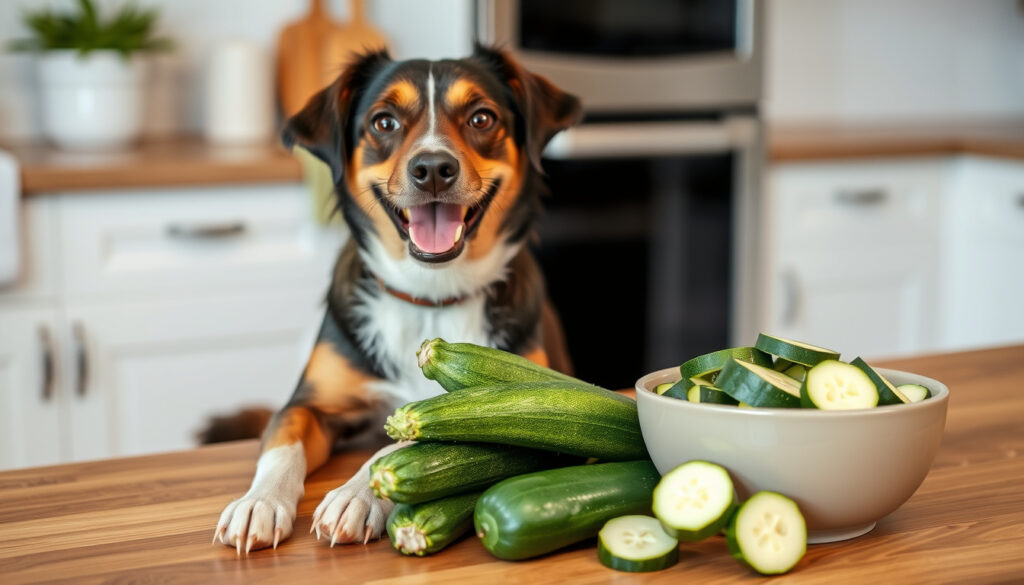
Can Dog Eat Zucchini? A Vet-Approved Safety & Preparation Guide
You’re standing in the kitchen with a fresh zucchini, and your dog is giving you the hopeful eyes. The good news: zucchini is perfectly safe for dogs to eat when prepared the right way.
Safe for dogs: Yes, non-toxic ·
Calories per 100g: ~17 kcal ·
Water content: 95% ·
Key vitamins: A, C, K, B6, folate
Quick snapshot
- Zucchini is safe for dogs when fresh and plain (Chewy (pet nutrition resource))
- Skin and seeds are safe in small quantities (Chewy) (Chewy (pet nutrition resource))
- Treats should be ≤10% of daily calories (Chewy) (Chewy (pet nutrition resource))
- Exact safe amount depends on dog size; individual tolerance varies (We Feed Raw (pet nutrition brand))
- Long-term effects of daily feeding are not extensively studied (We Feed Raw (pet nutrition brand))
- No proven cases of poisoning from fresh zucchini; symptoms from moldy zucchini can appear within hours (Chewy)
- Digestive upset, if it occurs, typically resolves within 24 hours
- Start with one small piece (1–2 teaspoons for small dogs) and monitor for 24 hours (We Feed Raw)
- Gradually increase if no adverse reaction, always within the 10% treat rule
Five key nutrition numbers for zucchini, based on standard USDA data and veterinary guidance:
| Nutrient | Value (per 100g) |
|---|---|
| Calories | 17 kcal |
| Water content | 95% |
| Dietary fiber | 1.1 g |
| Protein | 1.2 g |
| Vitamin C | 17.9 mg (30% DV for humans) |
The pattern here is clear: zucchini is almost pure water with a modest fiber and vitamin profile. It’s a hydrating, low‑calorie treat—not a meal replacement.
Can Dogs Eat Zucchini?
Yes, zucchini is non‑toxic and safe for dogs in moderation, according to veterinary nutritionists at Chewy (pet care resource). The American Kennel Club also lists zucchini among dog‑safe vegetables. My Woof (pet wellness publisher) notes it provides vitamins A, C, and K, along with potassium, magnesium, and fiber.
Is zucchini safe for dogs?
- Non‑toxic and widely recognized as safe by veterinary sources (Chewy)
- Low calorie—about 17 kcal per 100g—making it great for weight management (Chewy)
- Rich in vitamins A, C, K, B6, and folate (My Woof)
- High water content (95%) aids hydration—especially useful in warm weather (Chewy)
The implication: zucchini is one of the safest vegetables you can offer your dog, as long as it’s fresh, plain, and served in sensible amounts.
For overweight dogs or those on a calorie‑controlled diet, zucchini offers a crunchy, satisfying treat that adds almost nothing to the daily calorie tally—just 17 kcal per 100g is roughly one‑tenth the calories of a typical commercial dog biscuit.
Can Dogs Eat Zucchini Raw or Cooked?
Both raw and cooked zucchini are safe, but preparation matters. Chewy states that dogs can eat zucchini raw or cooked, as long as it’s plain. The key difference: cooked zucchini is softer and easier to digest, especially for small dogs or those with sensitive stomachs.
Can dogs eat raw zucchini?
- Wash thoroughly to remove any pesticide residue (Chewy)
- Cut into bite‑sized pieces to reduce choking risk, particularly for small breeds (Chewy)
- Some dogs may have trouble chewing raw zucchini; The Pets Table (pet food brand) notes that raw is best offered in small amounts
Can dogs eat cooked zucchini?
- Serve plain—no oil, butter, salt, or seasonings (Chewy)
- Cooking methods: steaming, boiling, or lightly baking without additives
- According to The Pets Table, cooked zucchini is generally easier for dogs to digest
Should I remove the skin and seeds?
- Skin is safe and may even be the most nutritious part; wash well to remove pesticides (Chewy)
- Seeds are safe in small amounts—they are soft and not a choking hazard (Chewy)
- The skin is one of the more nutritious parts, according to Jope (pet nutrition blog)
Can dogs eat zucchini leaves?
- Zucchini leaves are not recommended—they can cause mild gastrointestinal irritation (Chewy)
- Stick to the fruit (the vegetable part) only
The catch: the preparation step that’s easy to overlook is seasoning. Dogs should never eat zucchini cooked with garlic, onions, or heavy oils—those ingredients are toxic or unhealthy. Plain is the only safe route.
How Much Zucchini Can I Give My Dog?
Portion control is the biggest variable. Chewy emphasizes that all treats, including zucchini, should make up no more than 10% of a dog’s daily calorie intake. This is a general rule known as the 90/10 rule. The We Feed Raw (raw pet food brand) offers a more detailed size‑based guide:
Four weight categories, one pattern: smaller dogs get smaller portions, and every dog starts with a modest amount.
| Dog weight | Daily zucchini portion (as treat) |
|---|---|
| Under 30 lbs | 1–2 teaspoons |
| 31–50 lbs | 2–3 teaspoons |
| 51–90 lbs | 1–2 tablespoons |
| Over 90 lbs | 3–4 tablespoons |
The trade‑off: while zucchini is low in calories, overfeeding can still cause digestive upset. The 90/10 rule provides a safe ceiling—adjust downward if your dog has a sensitive stomach.
A small dog owner who feeds two tablespoons of zucchini (about 8–10 kcal) on top of a high‑calorie commercial diet may inadvertently exceed the 10% treat allowance. Always calculate the treat calories against your dog’s total daily needs.
Can dogs eat zucchini every day?
- Yes, zucchini can be a daily low‑calorie treat within the 10% rule (Chewy)
- Start with a small amount and watch for loose stools or gas
- Rotate with other safe vegetables (cucumber, green beans) for variety
Why this matters: most commercial dog treats are calorie‑dense. Replacing even one daily treat with zucchini can shave 30–50 kcal from a dog’s weekly calorie load, which adds up over a month.
What Veggies Can Dogs Not Eat?
Not all vegetables are dog‑friendly. Understanding which ones are off‑limits helps you keep zucchini in perspective as a safe choice.
Which vegetables are toxic to dogs?
- Onions and garlic (all forms) – can cause anemia
- Grapes and raisins – can cause kidney failure
- Mushrooms (wild) – many are toxic
- Rhubarb – contains oxalates that damage kidneys
- Raw potatoes – contain solanine, which is toxic
- Avocado – persin can cause vomiting and diarrhea
Zucchini belongs to the same family as cucumber and pumpkin, which are all safe. Chewy confirms that zucchini is non‑toxic and widely accepted by veterinarians.
How does zucchini compare to other safe vegetables?
Five common safe vegetables, one winner for hydration:
| Vegetable | Calories (per 100g) | Water content | Key benefit |
|---|---|---|---|
| Zucchini | 17 kcal | 95% | Hydration, low calorie |
| Cucumber | 15 kcal | 96% | Hydration |
| Green beans | 31 kcal | 90% | Fiber, vitamins |
| Carrots | 41 kcal | 88% | Vitamin A, crunch |
| Pumpkin (cooked) | 26 kcal | 92% | Digestive health |
The pattern: zucchini and cucumber are the go‑to choices for owners focused on hydration and calorie control. Pumpkin is better for digestive regulation.
Always check with a veterinarian before introducing new vegetables, especially for dogs with existing health conditions.
What Are the Symptoms of Zucchini Poisoning in Dogs?
The word “poisoning” sounds alarming, but true zucchini poisoning is extremely rare. The risk comes from cucurbitacins—bitter compounds that can build up in zucchini that has been stored improperly or is moldy.
Can zucchini actually be poisonous?
- Only moldy or old zucchini can contain high levels of cucurbitacins (Chewy)
- Fresh, properly stored zucchini is safe and contains negligible cucurbitacins
- Signs of cucurbitacin poisoning in dogs: vomiting, diarrhea, excessive drooling, lethargy
What are signs of overconsumption or toxicity?
- Mild overfeeding: loose stools, gas, mild stomach upset
- Moderate overfeeding: vomiting, diarrhea, decreased appetite
- True toxicity (from moldy zucchini): rapid onset of severe vomiting, drooling, weakness
What about moldy zucchini?
- Zucchini that is soft, wrinkled, or has dark spots should be discarded
- Store zucchini in the refrigerator and use within 5–7 days of purchase
- If your dog eats moldy zucchini and shows symptoms, contact your veterinarian immediately
The catch: most “zucchini poisoning” cases reported online are actually cases of overfeeding or allergy, not cucurbitacin toxicity. Still, if symptoms persist more than 24 hours, a vet visit is warranted.
A dog owner who buys zucchini in bulk and leaves it on the counter for a week risks feeding a moldy product. The safe approach: buy small quantities, refrigerate, and inspect before serving.
Upsides
- Extremely low calorie – supports weight management
- High water content – aids hydration
- Rich in vitamins A, C, K, B6, and folate
- Easy to prepare raw or cooked
- Safe skin and seeds (in moderation)
Downsides
- Choking risk if not cut into small pieces
- Digestive upset if overfed
- Moldy zucchini can cause toxicity
- Leaves and stems are not recommended
- Must be served plain – no oil, salt, or seasonings
Step‑by‑Step: How to Safely Serve Zucchini to Your Dog
- Wash the zucchini thoroughly under running water to remove dirt and pesticide residue.
- Inspect for any soft spots, mold, or signs of spoilage. Discard if questionable.
- Cut into bite‑sized pieces appropriate for your dog’s size. For small dogs, quarter‑inch cubes; for large dogs, half‑inch cubes.
- Cook (optional) – steam or boil without any added oil, salt, butter, or seasonings. Let it cool.
- Serve a small amount as a treat. Start with the portion sizes from the table above.
- Monitor your dog for 24 hours after the first serving. Watch for loose stools, gas, or vomiting.
Why this matters: a simple preparation mistake—like adding garlic salt or serving a whole zucchini without cutting it—turns a healthy treat into a hazard. Following these steps eliminates the major risks.
“Zucchini is a perfectly safe, low‑calorie treat for dogs when it’s fresh and plain. It’s a great way to add moisture and fiber to the diet without adding many calories.”
— Veterinary nutritionist, American Kennel Club
“The 90/10 rule is a simple guideline: 90% of your dog’s calories should come from a complete and balanced diet, and only 10% from treats like vegetables or training rewards.”
— Purina Veterinary Team
For the dog owner who wants to add variety and hydration to their pet’s diet, zucchini is a smart, vet‑approved choice. The key is portion control: keep it within the 10% treat allowance, start small, and always serve it plain. For an owner managing their dog’s weight, the choice is clear: replace one high‑calorie commercial treat with a zucchini piece, or risk the slow creep of extra pounds that leads to joint strain and metabolic issues.
For another vet-approved treat, check out our guide on bananas for dogs.
Frequently asked questions
Can puppies eat zucchini?
Yes, but serve in very small amounts (1–2 teaspoons) once the puppy is weaned. Puppies have sensitive digestive systems, so introduce slowly and monitor for any upset.
Is organic zucchini better for dogs?
Organic zucchini reduces the risk of pesticide residue, but it’s not necessary if you wash the skin thoroughly. The nutritional profile is the same.
Can dogs eat fried zucchini?
No. Fried zucchini is high in unhealthy fats and often coated in batter and salt. It offers none of the health benefits and can cause pancreatitis if eaten in quantity.
Can dogs eat zucchini bread?
Not recommended. Zucchini bread usually contains sugar, oil, flour, and sometimes raisins or chocolate—all of which are unhealthy or toxic for dogs.
Does zucchini cause gas or bloating in dogs?
In some dogs, yes—especially if fed in large amounts. Start with a small portion and increase gradually. Cooking the zucchini can reduce the gas‑producing effect.
Can dogs eat yellow squash instead of zucchini?
Yes. Yellow squash (summer squash) is very similar to zucchini in safety and nutrition. The same preparation guidelines apply: wash, cut, and serve plain in moderation.
Related reading: How to Cook Pork Spare Ribs | Chicken Breast Recipes – Juicy and Tender Every Time
More related posts
 Kim Tae-Ri: Biography, French Skills & Next Drama
 Dwyane Wade: NBA Career, Family, Net Worth, and More
 Jodie Sweetin: Biography, Age, Net Worth, Marriages, and More
 Christ the Redeemer: Facts, History, and Visitor Guide
 Yeppoon Family Practice – GPs, Hours, Contact & Fees
 Baldur’ Gate 3: Woke, LGBTQ, 17,000 Ending Explained
 News.com.au: Latest Verified Information & Key Facts
 Map of Europe Countries – Labeled, Printable and Interactive Guide
