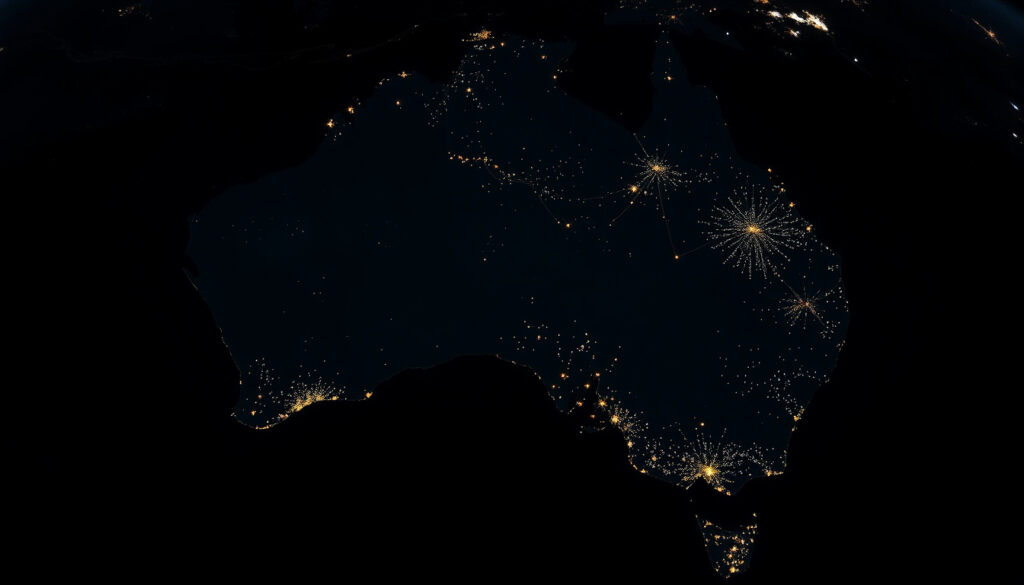
Population of Australia 2025: Current Data and Comparisons
Ever wondered how many people call Australia home right now? The number shifts by the minute, but the latest official count gives us a clear picture: 27,724,744 as of September 2025, according to the Australian Bureau of Statistics (ABS) (the nation’s official statistical agency).
Current population (September 2025): 27,724,744 ·
Annual population growth rate (2024–2025): 1.6% ·
Population density (2023): 3.44 people per km² ·
Percentage living in urban areas: 86% ·
Median age (2024): 37.5 years
Quick snapshot
- Current population: 27,724,744 (ABS)
- Annual growth 1.6% (ABS)
- 86% live in urban areas (Worldometers)
- 2022: 26.0 million (Australian Government Population Statement)
- Sep 2025: 27.72 million (Australian Government Population Statement)
- Projected 2030: ~30 million (Australian Government Population Statement)
- Growth slowing to 1.3% in 2025–26 (Australian Government Population Statement)
- Western Australia fastest growing state (Australian Government Population Statement)
- Net overseas migration 260,000 forecast (Australian Government Population Statement)
Australia’s landmass is huge, but its population clusters — a fact that drives most of its demographic story.
| Label | Value |
|---|---|
| Official population estimate | 27,724,744 (ABS, Sep 2025) |
| Population density | 3.44 people/km² |
| Most populous state | New South Wales (8.3 million) |
| Least populous state | Tasmania (573,000) |
| Largest city | Sydney (5.3 million metro) |
What is the population in Australia right now?
Australia added 423,600 people in the year to September 2025 — that’s like adding a city the size of Canberra every 12 months.
What was the population of Australia in 2022?
In 2022, Australia’s population reached 26.0 million, according to the Australian Government Population Statement (the federal government’s demographic outlook). That’s an increase of about 1.7 million over three years.
What is the projected population for 2026?
For 2026, estimates range between 27.2 and 28.5 million. The Government’s medium scenario projects around 27.6 million by mid-2026, as outlined in the same Population Statement.
How fast is Australia’s population growing?
Annual growth hit 1.6% in the year ending September 2025, according to the ABS. But growth is expected to slow to 1.3% in 2025–26 due to falling net overseas migration and a record low fertility rate of 1.42 children per woman, per the Australian Government Population Statement.
The implication: Australia’s population is still climbing, but the engine is shifting from natural increase to migration — and that makes future growth more sensitive to policy changes.
Where does 90% of Australia’s population live?
Over 90% of Australians live in urban areas, mostly along the eastern and southeastern coasts, according to Worldometers. The interior, known as the Outback, is one of the most sparsely populated regions on Earth.
- New South Wales is the most populous state with 8.3 million (ABS).
- Victoria and Queensland together hold roughly 12 million.
- Tasmania, the least populous state, has 573,000 residents.
Why is most of Australia’s population concentrated in coastal areas?
Australia’s interior is arid and extreme. Most of the country’s fertile land and water resources lie near the coast, especially in the southeast. Historical settlement patterns — beginning with the first European colonies in Sydney and Melbourne — locked in a coastal focus that continues today.
What are the most populous states and territories?
New South Wales and Victoria contain around 57% of the total population, as reported by the ABS. Western Australia is the fastest growing state, while Tasmania remains the slowest, according to the Australian Government Population Statement.
The pattern: Australia’s population hugs the coast, and that concentration is only intensifying as capital cities grow nearly twice as fast as regional areas.
What’s bigger, Canada or Australia?
Despite being the sixth-largest country by land area, Australia’s population is only 27.7 million — less than Canada’s 40 million and far behind the USA’s 335 million.
Is China larger than Australia?
China’s land area of 9.6 million km² exceeds Australia’s 7.69 million km², according to the CIA World Factbook. In population terms, China has about 51 times more people than Australia.
How does Australia’s population compare to the USA?
The USA has roughly 335 million residents, as estimated by Worldometers, making it more than 12 times larger than Australia’s population. Australia ranks 54th globally in population size.
The takeaway: Australia’s vast size is matched by few, but its population ranks it 54th globally — showing just how empty the continent is outside a few coastal clusters.
What percentage of Australia is Irish?
Irish ancestry is one of the top reported ancestries in Australia, but the exact proportion depends on how you measure it — census vs survey.
What is the most Irish town in Australia?
About 30% of Australians claim Irish ancestry, based on Census data cited by Wikipedia. The town with the highest proportion of Irish-ancestry residents is often cited as Portland, Victoria, though figures vary depending on the source.
What this means: Ireland’s influence on Australian culture runs deep, but the numbers are softer than they seem — many Australians tick Irish ancestry along with other backgrounds.
What are the safest cities in Australia?
Australia’s safest cities consistently rank high in global liveability indices, but ‘safest’ depends on whether you measure crime rates, road safety, or perceptions.
What is the nicest city to live in Australia?
- Canberra, Adelaide, and Hobart are often ranked as the safest in terms of crime rates, according to Numbeo.
- Melbourne and Sydney also have crime rates lower than many global cities, as noted by Worldometers.
- Quality-of-life indices frequently highlight Adelaide and Brisbane for affordability and climate.
The trade-off: Safety and liveability are strong across Australian cities, but housing affordability — especially in Sydney and Melbourne — remains a key concern for residents.
Four large countries, one clear pattern: Australia’s landmass is smaller than Canada’s, yet its population is a fraction of each.
Australia’s ranking among large countries reveals its extreme low density compared to its peers.
| Country | Land area (km²) | Population (2025 est.) |
|---|---|---|
| Australia | 7,692,024 CIA Factbook | 27,724,744 ABS |
| Canada | 9,984,670 CIA Factbook | ~40 million Worldometers |
| China | 9,596,961 CIA Factbook | ~1.42 billion Worldometers |
| USA | 9,833,517 CIA Factbook | ~335 million Worldometers |
The pattern: Australia’s population density is so low that even its largest cities feel small compared to global megacities.
Timeline signal
A look at key milestones and projections for Australia’s population.
- 2022: Population reached 26.0 million (Australian Government Population Statement)
- September 2025: Population hit 27,724,744 (ABS)
- 2026 (projected): Estimated 27.2–28.5 million (Government medium scenario)
- 2030 (projected): Around 30 million (medium scenario)
Confirmed facts
- Current population figure from ABS (Sep 2025) — 27,724,744
- Australia is smaller in land area than Canada
- Over 90% of population lives in urban coastal areas
- Population grew 1.6% in the year to Sep 2025
- Western Australia is the fastest growing state (Australian Government Population Statement)
What’s unclear
- Exact number of Australians with Irish ancestry varies by survey (30–35%)
- Safety rankings depend on methodology; no single authoritative list
- Fertility intentions have been falling since 2001 but remain above the total fertility rate (medium confidence)
- Future net overseas migration levels depend on visa policy changes
- The exact impact of fertility rate decline on long-term growth is uncertain
“Australia’s population continues to grow, driven by net overseas migration, but we are seeing a slowdown in natural increase as fertility rates hit record lows.”
— Australian Bureau of Statistics spokesperson, in the ABS National, state and territory population release
“Australia’s population growth is highly concentrated in capital cities, a trend that is expected to persist as regional areas grow at half the rate.”
— World Population Review editorial, in their Australia population page
For policymakers grappling with housing and infrastructure in Sydney and Melbourne, the choice is clear: plan for continued urban concentration, or risk even greater strain on services. The demographic data leaves little room for ambiguity — Australia’s population will keep growing, and it will keep clustering along the coast.
While the national total continues to climb, Australias third-largest city Brisbane has grown to 2.83 million residents, solidifying its position in the urban hierarchy.
Frequently asked questions
What is the population of Australia by state?
New South Wales has 8.3 million, Victoria about 6.8 million, Queensland 5.4 million, Western Australia 2.9 million, South Australia 1.8 million, Tasmania 573,000, the Australian Capital Territory 460,000, and the Northern Territory 250,000 (ABS 2025 estimates).
What is the male-to-female ratio in Australia?
As of 2024, the ratio is roughly 98.9 males per 100 females, according to Worldometers.
What is the life expectancy in Australia?
Life expectancy at birth is about 83.2 years (2023), according to the ABS, one of the highest in the world.
How many people live in Sydney?
Sydney’s metropolitan population is approximately 5.3 million, per the ABS.
What is the net migration rate of Australia?
Net overseas migration was 311,000 in the year to September 2025 (ABS), and is forecast to drop to 260,000 in 2025–26 (Australian Government Population Statement).
Is Australia’s population growing or declining?
Growing. The population increased by 423,600 people (1.6%) in the year to September 2025 (ABS), and is projected to reach around 30 million by 2030.
More related posts
 How to Cook Pork Spare Ribs: Oven, Slow Cooker, Air Fryer
 Wade Wilson: Murders, Trial, Death Sentence & Latest Updates
 Emily Bader: Biography, Career, Age, and Net Worth
 Hugo Weaving: Biography, Epilepsy, Partner, Height & Net Worth
 Alba Hot Springs – Australia Not Romania Guide
 Newcastle United F.C.: Fixtures, News, Transfers & Players
 Erik Menendez: Diagnosis, Parole, and Family Update
